
When your child is struggling with big emotions or regulation challenges at home, it can feel overwhelming. Many parents want to help their children learn to manage their reactions, but support is often limited, and some parents may struggle with regulation themselves. That is why events like EPIC Families Live are so helpful.
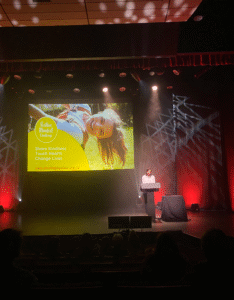
EPIC Families Live was held on 12 October at Baycourt Theatre in Tauranga. It was organised and hosted by Bay Paediatrics and brought together hundreds of whānau to learn from professionals about wellbeing and neurodiversity. One of the speakers was Rachelle Hawes, founder of Your Happy Place and creator of the Positive Mindset Challenge. Rachelle shared a heartfelt talk about her own parenting journey and how simple changes made a huge difference in her family’s wellbeing.
A real look at family life
Rachelle began her talk with the familiar drill many parents relate to. “Come on, we need to go. Have you cleaned your teeth? Why not? I asked you to clean your teeth ten minutes ago!”
Back then, she often felt stuck in a cycle of frustration and guilt. “It felt like I was on a mouse wheel I just couldn’t get off,” she said. “Now my boys are almost grown and I wish I could go back and do things differently.” Through years of trial and reflection, Rachelle discovered three simple changes that transformed her household. They might surprise you.
1. Understanding the food and mood connection
 The first change began with food. Rachelle noticed that some foods triggered strong emotional reactions in herself and her children. Additives, wheat and dairy were key culprits. “When I stopped eating those foods my uncontrollable outbursts eased unbelievably,” she shared. Her children also had sensitivities, one to gluten and the other to yeast.
It can be hard to imagine food affecting behaviour but as Rachelle explained, food fuels our body and therefore our brain – it can energise our system or overload our system. If our body cannot process certain foods well, it can lower our tolerance for stress and make emotions harder to manage. For neurodivergent children, especially those on the autism spectrum, food can be a particular challenge. Sensory preferences can mean that only certain textures or consistent foods are accepted. Rachelle encouraged parents to take a low-pressure approach. Offering a small “buffet” of simple, separate foods can help. Options like carrot sticks, boiled eggs, nuts, rice cakes, or frozen corn (which stays the same every time) are easy and consistent.
As she said, “It’s about progress, not perfection.” Choosing colourful, natural foods rather than processed packets can make a real difference over time.
2. The power of words and beliefs

The second change was understanding the power of our words. Rachelle shared research showing that by the age of twelve, a child with ADHD may have heard around 20,000 more negative or corrective messages than their peers. “This breaks my heart,” she said.
These constant corrections can build harmful beliefs in children, such as “I’m not good enough” or “I can’t do anything right.” Over time, these beliefs affect confidence, relationships and learning.
Instead, Rachelle encouraged parents and teachers to use positive and affirming language. Phrases like “You have an amazing brain”, “You are strong and healthy”, and “I love being around you” can help reshape a child’s self-image.
For neurodivergent children, this is especially important. They need to hear that their brain is unique, and that their special strengths are key to their success. As Rachelle said, “Everyone struggles sometimes, but when we understand the power of our words, it changes how we connect with our children.”
3. Finding calm through the breath
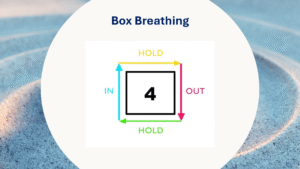 The third change that made a difference in Rachelle’s home was meditation and breathing. Rachelle said she will take time each morning to sit quietly, breathe deeply, or simply have a peaceful moment before the day began to help her feel calmer and more present.
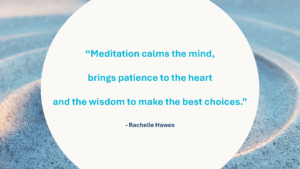
“Meditation looks different for everyone,” she explained. “It might be a walk, a swim, a song or even a quiet cup of coffee.” For her, it became a way to refill her energy and meet the day with patience instead of pressure.“When we find our own way to calm our mind and give back to ourselves first, then we have more to offer to those around us.” This practice is also powerful for children, especially those with ADHD or sensory processing differences. Their brains often feel “busy” or full of noise so doing a simple breathing technique is especially helpful to bring their thinking brain back online.
Rachelle taught the audience a simple box breathing technique: breathe in for four counts, hold for four, breathe out for four, and hold out for four. This steady rhythm tells the brain that it is safe and it calms the heart rate and supports focus. She also reminded parents that breathing tools should be taught during calm moments, not in the middle of a meltdown. “When we teach our kids tools while they are calm, they can use them later when things feel hard.”
Small changes, big shifts
 Rachelle’s message was filled with hope. Life with neurodivergent children can be messy and unpredictable but calm is possible. With small daily habits, choosing mindful food options, speaking with kindness and making space to breathe, families can build more connection and peace at home.
These are the same principles at the heart of the Positive Mindset Challenge, a self-help programme designed to make emotional regulation simple for families. It teaches tamariki tools for wellbeing through easy, bite-sized steps that fit into busy routines. The app is just $10 or families can access the full online programme for $99.
Ready to begin?
The Positive Mindset Challenge was created here in New Zealand to support parents, teachers, and youth organisations in building resilience and positivity in young people. It’s a holistic, practical approach that works for the whole family. The programme is especially helpful for families who are waiting for professional support and can be used alongside other therapies or as a self-guided tool to work through together at home.
To learn more, visit yourhappyplace.org.nz/whanau and start your journey toward a calmer, happier home.